


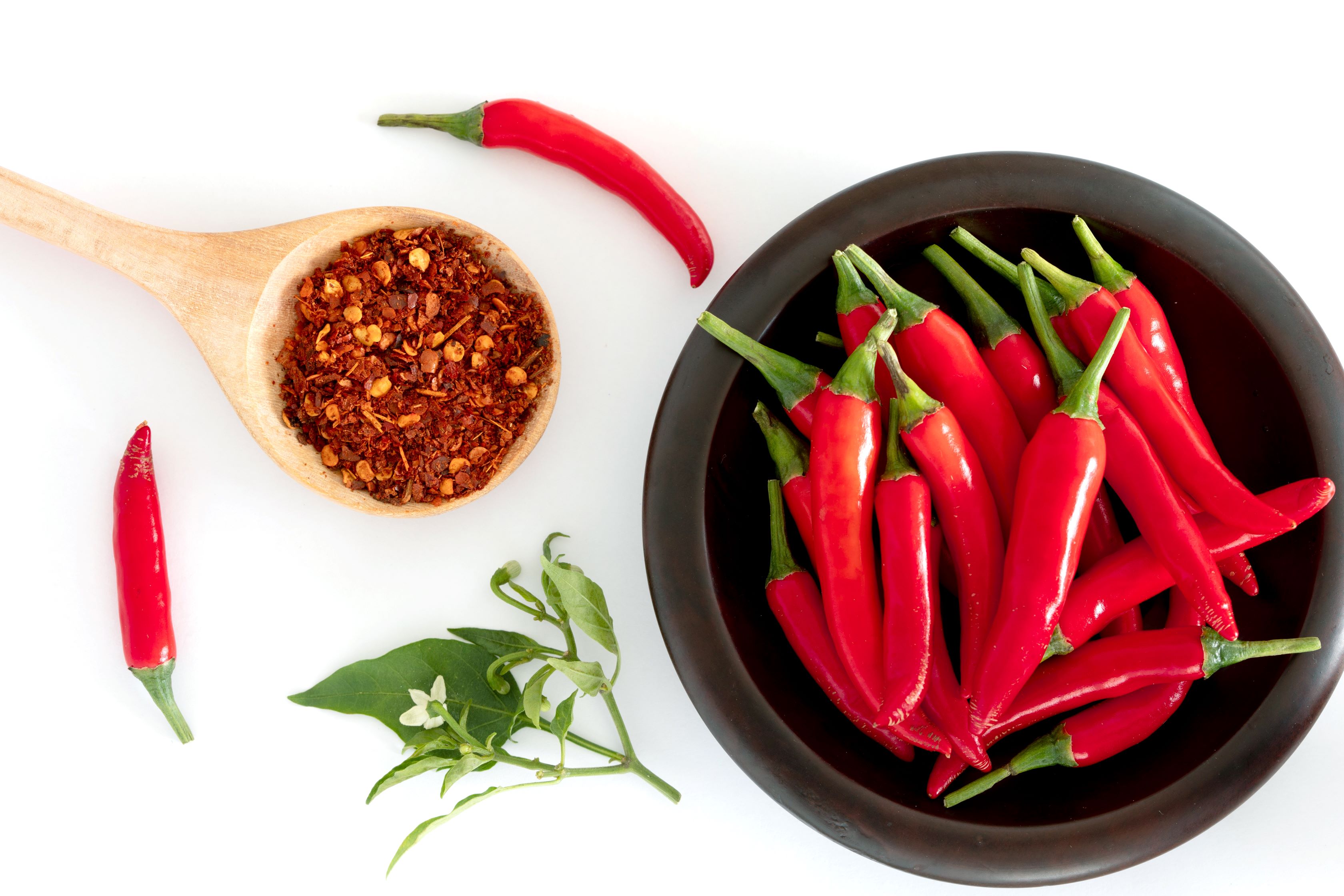
Capsaicin – What Is It and Where Does It Come From?
Capsaicin is the active component of plants from the Capsicum genus (chili peppers), part of the nightshade family. It is most abundant in hot chili peppers and was first isolated in 1876 by John Clough Thresh in its pure crystalline form.
What Neutralizes Capsaicin?
Capsaicin’s burning effect can be reduced by:
✅ Casein – found in milk and dairy products
✅ Fats – such as olive oil or vegetable oils
✅ Acids – like lemon juice or vinegar
How Is Capsaicin Used?
🔸 Culinary Uses – Adds spice and depth of flavor to dishes
🔸 Medicine & Pharmaceuticals – Used in warming ointments, pain relief patches, and metabolism-boosting supplements
🔸 Cosmetology – Found in hair care products and anti-cellulite treatments
🔸 Personal Protection – An active ingredient in pepper sprays and repellents
Is Capsaicin Healthy?
As Paracelsus once said, "The dose makes the poison." This applies to capsaicin—in moderate amounts, it offers numerous health benefits, but excessive intake may cause irritation.
Fun Fact: 🌶️ Why Are Chili Peppers Spicy?
The heat of chili peppers is an evolutionary defense mechanism—the burning sensation deters herbivores, protecting the plant from being eaten.
Scoville Heat Scale – How Hot Is Capsaicin?
The Scoville Scale (SHU – Scoville Heat Unit), developed in 1912 by Wilbur Scoville, measures the capsaicin concentration in chili peppers:
📌 Pure Capsaicin – 16,000,000 SHU
📌 Jalapeño Pepper – 3,000–8,000 SHU
📌 Cayenne Pepper – 30,000–50,000 SHU
📌 Habanero Pepper – 100,000–350,000 SHU
📌 Sweet Bell Pepper – 0 SHU
Health Benefits of Capsaicin
💊 Pain Relief – Interacts with TRPV1 receptors to reduce pain sensation
🔥 Metabolism & Fat Burning – Increases thermogenesis and calorie expenditure
🩸 Blood Pressure Regulation – Expands blood vessels, aiding circulation
🛡️ Antioxidant Properties – Slows oxidation processes, promoting heart and vascular health
🦠 Antibacterial Effects – Research suggests capsaicin may inhibit bacterial growth (e.g., Salmonella typhimurium)
Spicy Peppers for a Healthy Lifestyle!
Adding chili peppers to your diet can provide numerous health benefits. However, it's important to introduce them gradually to allow the body to adjust and avoid irritation. If there are no contraindications, incorporating capsaicin into meals can enhance both taste and well-being. 🌶️🔥


![616x948_Eros_Pista_2600g_616x948px_202210_gasztro[1].png](/environment/cache/images/productGfx_570_500_500/616x948_Eros_Pista_2600g_616x948px_202210_gasztro1.webp "616x948_Eros_Pista_2600g_616x948px_202210_gasztro[1].png")


